



“The victims’ voices are silenced almost before they are raised, and the truth—the whole objective truth of the facts—remains in obscurity.”
—Alice Miller, Banished Knowledge, p. 95
When I published This Penis Business: A Social Activist’s Memoir in 2024, many friends asked whether the word penis in the title would limit its reach. It has. I have watched people avert their eyes at book fairs, parents pull children away from my table, and even a library director tell me there wasn’t “enough interest” to justify a book talk.
That reaction is not incidental. It is symptomatic of a much larger problem—our culture’s embrace of male circumcision and institutional and personal fear of calling out the practice as problematic.
Long before I became active in the movement opposing infant male circumcision, I was appalled by the casual assault on newborn boys’ genitals and mystified by the assumption that half of all babies born somehow require surgical alteration. For over 25 years as an intactivist, I have been struck not only by the violence of the practice but by the extraordinary degree of ignorance surrounding it—ignorance so complete that many Americans cannot acknowledge its pain, risks, sexual consequences, or even its physical reality.
And still, parents sign the consent forms.
Why?
Intactivists often point to cognitive dissonance, medical misinformation, profit motives, or the inertia of tradition. These explanations have merit, but none fully account for the depth of cultural attachment to circumcision. Parents do not profit. Many clinicians function within institutional routines rather than personal conviction. Medicine itself is changing demographically and culturally.
Something deeper is at work.
Alice Miller and “Banished Knowledge”
In the remainder of this essay, I turn to the work of the late Alice Miller (1923–2010), whose concept of banished knowledge offers a powerful framework for understanding why genital cutting persists despite decades of protest. Miller’s quotes and many of the insights below come from her book Banished Knowledge: Facing Childhood Injuries (first Anchor Books edition, published in October 1991). Her many other books, including Thou Shalt Not Be Aware: Society’s Betrayal of the Child (first published in English in 1981) and The Body Never Lies: The Lingering Effects of Hurtful Parenting (2004), explore similar themes, critique Freud’s premise that childhood memories of abuse are fantasies, and in general indict mainstream psychiatry and psychoanalysis as permitting the ongoing mistreatment and devaluation of children at the hands of their parents (also themselves victims). Miller was a prolific writer, and I am aware that some of her ideas are considered “extreme,” but I believe that her insights about child genital mutilation and its consequences bear attention by the intactivist movement, as we continue to fight for the rights of children and the adults they will become to be free from this form of suffering.
Miller was a Polish-Swiss psychoanalyst, philosopher, and intellectual, who in her many books, argued that entire societies repress knowledge of harms inflicted on children—especially when those harms are normalized, justified as “for the child’s own good,” or sanctified by medicine or religion. Abuse is denied, minimized, intellectualized, or reframed as love. Victims are encouraged to deny the harm, to move on, and especially to forgive their parents who, after all (as we are reminded), are typically under a great deal of stress.
Miller was unequivocal: circumcision is child abuse. And shielding perpetrators from accountability results in the repetition of harm across generations.
As a rule, children who were once injured will later injure their own children, maintaining that their behavior does no harm because their own loving parents did the same. (Banished Knowledge, p. 137)
What makes this knowledge intolerable is precisely what makes it powerful: acknowledging it destabilizes cherished beliefs about good parenting, medical authority, religion, and love itself.
As Miller also wrote:
The ‘reasons’ vary from culture to culture, but common to all is the fictitious claim that circumcision is performed in the interests of the child. (Banished Knowledge, p. 133)
Why Awareness Campaigns Fail
The intactivist movement has long assumed that information drives change and if that parents knew the facts, they would refuse circumcision.
But after 50 years of awareness raising, we need to acknowledge that this assumption has proven to be unwarranted.
Language itself becomes an obstacle. Words like penis and foreskin provoke embarrassment or disgust. Euphemisms such as procedure, and even circumcision drain any suggestion of violence from the act, while more direct terms—abuse, assault, mutilation—trigger defensiveness and panic among people we revere and respect as moral authorities. Naming the truth implies blame.
- Parents recoil. I cannot count the number of women—even regret mothers—who have told me that labeling circumcision as child abuse is a bridge too far.
- Religious authorities are highly offended. Even among Jewish intactivists, there’s tremendous reluctance to call out practitioners of ritual circumcision, to say that cutting a child’s genitals is wrong.
- Physicians and nurses double down. They insist that they are only doing the parents’ bidding.
- Psychotherapists retreat. Victims are told—explicitly or implicitly—that their rage is excessive, their pain imaginary, their grief disloyal.
Yet in no other context would these actors be absolved for authorizing the removal of a healthy body part from a non-consenting child or for blaming the adult victim for his misery.
The Foreskin as Banished Knowledge
Crucially, it is not only the act of circumcision that is hidden. The foreskin itself—its anatomy, function, appearance, and value—has been systematically erased from cultural and medical knowledge in the United States.
Most Americans born after World War II have never seen an intact adult penis. Many have never seen an intact child. The foreskin is removed behind closed doors and then disappears—discarded, incinerated, or commodified. It cannot be seen, touched, or imagined back into existence.
Its absence creates no visible loss—only a void and the potential experience of grief.
That void is filled with shame, jokes, silence, and misinformation.
Men grow up unable to name what is missing. Some do not realize until middle age that the ring around their penis is a scar. Others experience unexplained numbness, pain, flashbacks, or terror—only to be told by clinicians and therapists that circumcision is “not an issue.”
How could it be an issue, when the organ itself barely exists?
Institutional Erasure of the Foreskin
The banishing of the foreskin is not accidental. Medical textbooks omit it. Anatomy charts erase it. Sex education ignores it. Professional training pathologizes it.
Even “official” knowledge about the foreskin—information produced by public health authorities—information made available to the general public—is utterly suppressed. Look no further than the full-color Wall Chart of Human Anatomy, a publication of the National Library of Medicine’s “Visible Human Project,” touted by its publishers as “[the] first anatomically exact, three-dimensional, computer-generated reconstruction of a human body.” This image is from the latest edition, published in 2012.
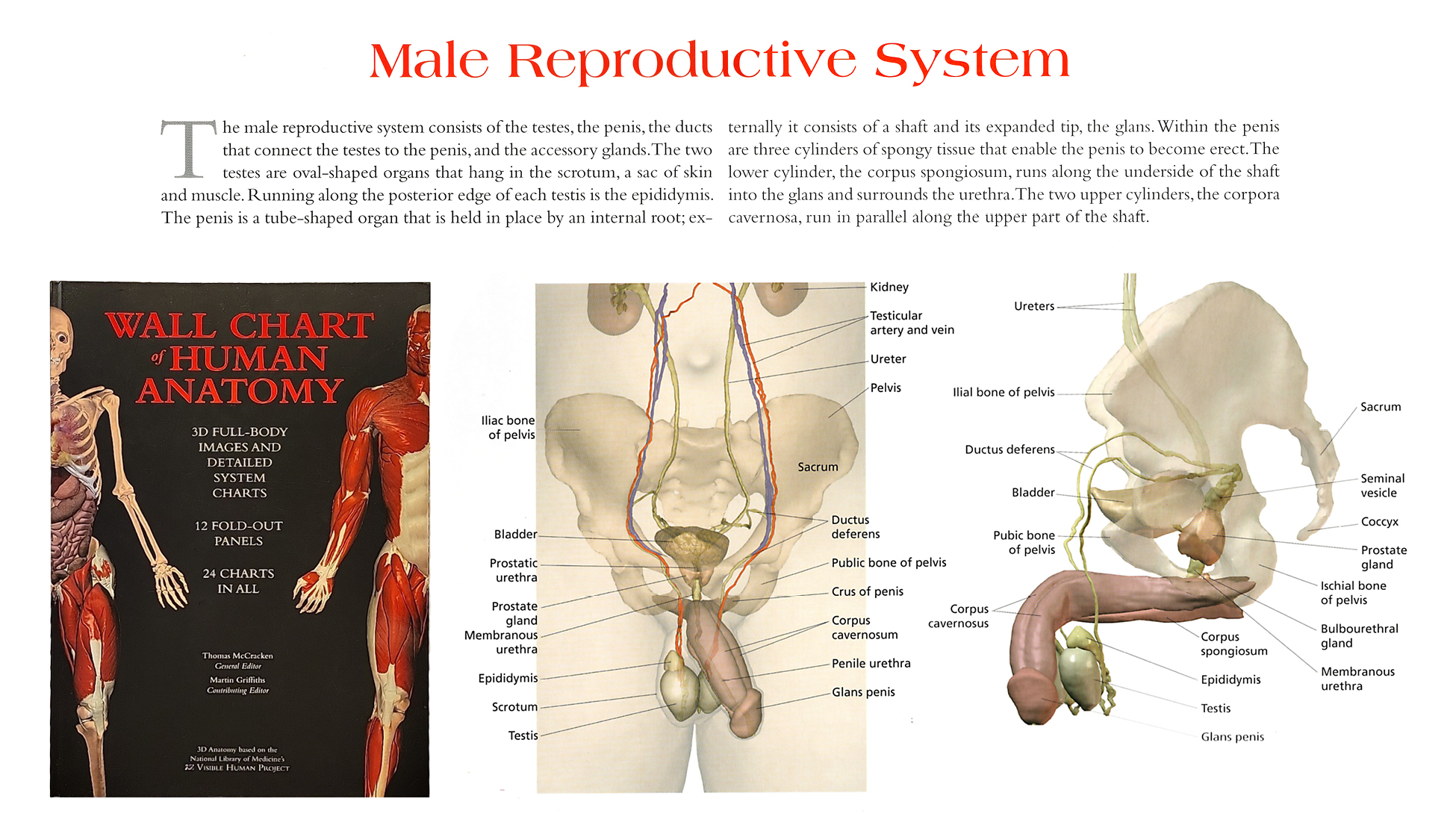
Look carefully. Look at the extensively labeled body parts. Look again. No, you’re not mistaken. This “complete” anatomically exact American male has no foreskin.
So, massive change in awareness of the foreskin continues to elude us. In medicine, doctors trained by preeminent medical schools in the United States remain ignorant of the purpose and functions of the foreskin. Online searches of the term “foreskin medical education” turn up few references that describe in any detail its anatomy and functions, rather describing this specialized anatomical structure, this organ as “the part of the penis removed in a circumcision.” In its last extensive report (2012)) about circumcision, the American Academy of Pediatrics, rather than providing any information about the benefits conferred by this unique part of the male anatomy, the authors spilled page after page of ink denying circumcision risks and harms and analyzing in excruciating detail the (nearly non-existent) risks of living life with intact genitalia.
And don’t expect any help from the government. A full decade after the publication of the last Wall Chart’s images of the penis sans foreskin, Medlineplus.gov offers this vague, desexualized 2023 rendering, followed by a similarly vague description of the foreskin as a “loose fold of skin on the head of the penis” and a portentous remark about the organ’s fate: “the portion of tissue that is removed during circumcision.”
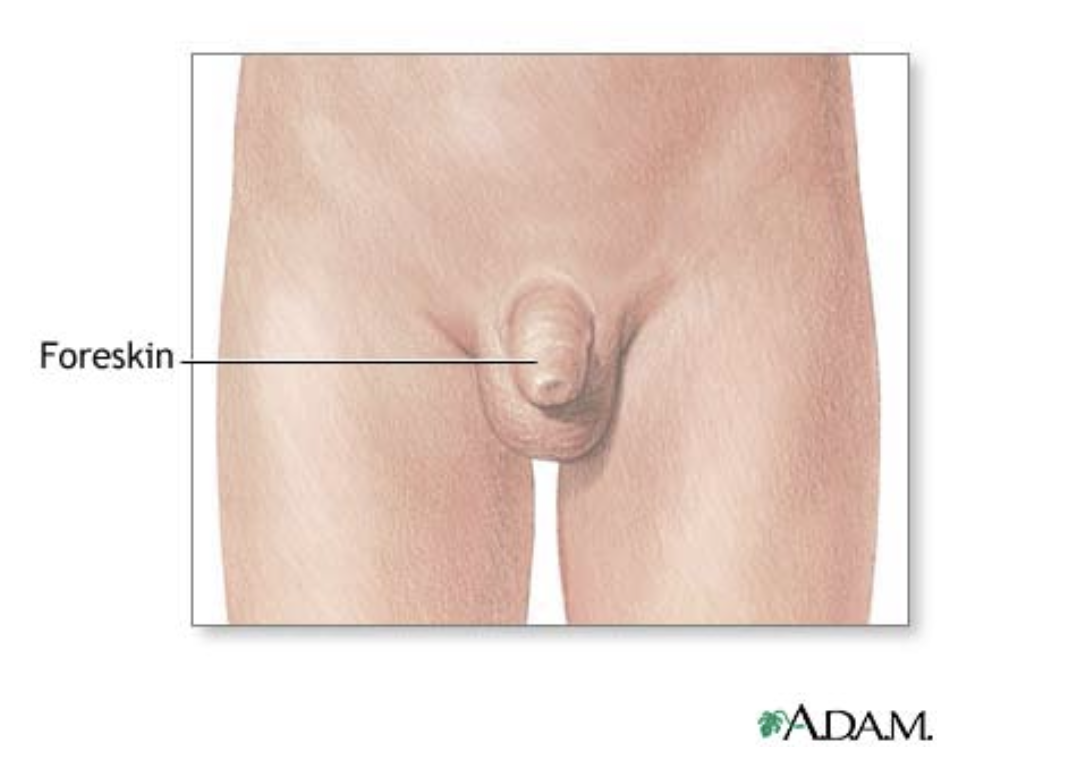
For better or worse, pornography is the place where young and old are able to see how the complete penis actually works.
Physicians trained at elite U.S. institutions routinely graduate without learning the foreskin’s structure, purpose, or sexual function. When problems arise, amputation is offered as the default solution—despite the availability of conservative treatments in non-circumcising countries.
This systematic ignorance reinforces Miller’s central claim: knowledge must be suppressed to sustain abusive customs.
Consequences for Victims
Men who speak about circumcision trauma are frequently dismissed as confused, obsessive, or hostile. Their suffering threatens the social order. If their pain is real, then trusted institutions and loved ones stand implicated.
Miller warned that when victims are required to empathize with those who harmed them—to forgive before being understood—the cycle of abuse is guaranteed to continue.
Healing, she insisted, begins not with repression or forgiveness, but with truth.
Implications for the Intactivist Movement
The lesson of banished knowledge is not merely rhetorical—it is strategic.
More facts alone will not suffice. More careful language will not resolve a problem rooted in repression, shame, and denial. The foreskin must be restored to visibility—not only anatomically, but morally and psychologically.
This requires confronting trauma on all sides: victims, parents, clinicians, and institutions. It requires tolerating rage without trying to neutralize it. It requires listening without defensiveness. It requires telling the truth even when it destabilizes our most cherished narratives.
As Miller wrote, only honesty and love—not denial or rationalization—can end what she called “this production of evil.”
Conclusion
The persistence of infant male circumcision in the United States does not rest on ignorance alone, but on the systematic banishment of knowledge—about the body, about trauma, and about accountability.
Alice Miller’s work helps explain why genital cutting endures despite decades of opposition, and why survivors so often suffer in silence. Miller’s banished knowledge paradigm further suggests that the intactivist movement would do well to go deeper, perhaps taking lessons from successful “truth and reconciliation” movements to redress social wrongs such as slavery, apartheid, or mass abuse wrought upon certain populations (intellectuals, immigrants, racial minorities, homosexuals) under fascist governments. We need to reprioritize conscious reckoning and genuine healing over “education” and “awareness-building,” integrate discussions of trauma and healing into social action and legal challenges.
Until the foreskin is restored to knowledge, truth, and empathy, it will remain easy to deny its loss—and to repeat the harm for generations to come.

No Comments